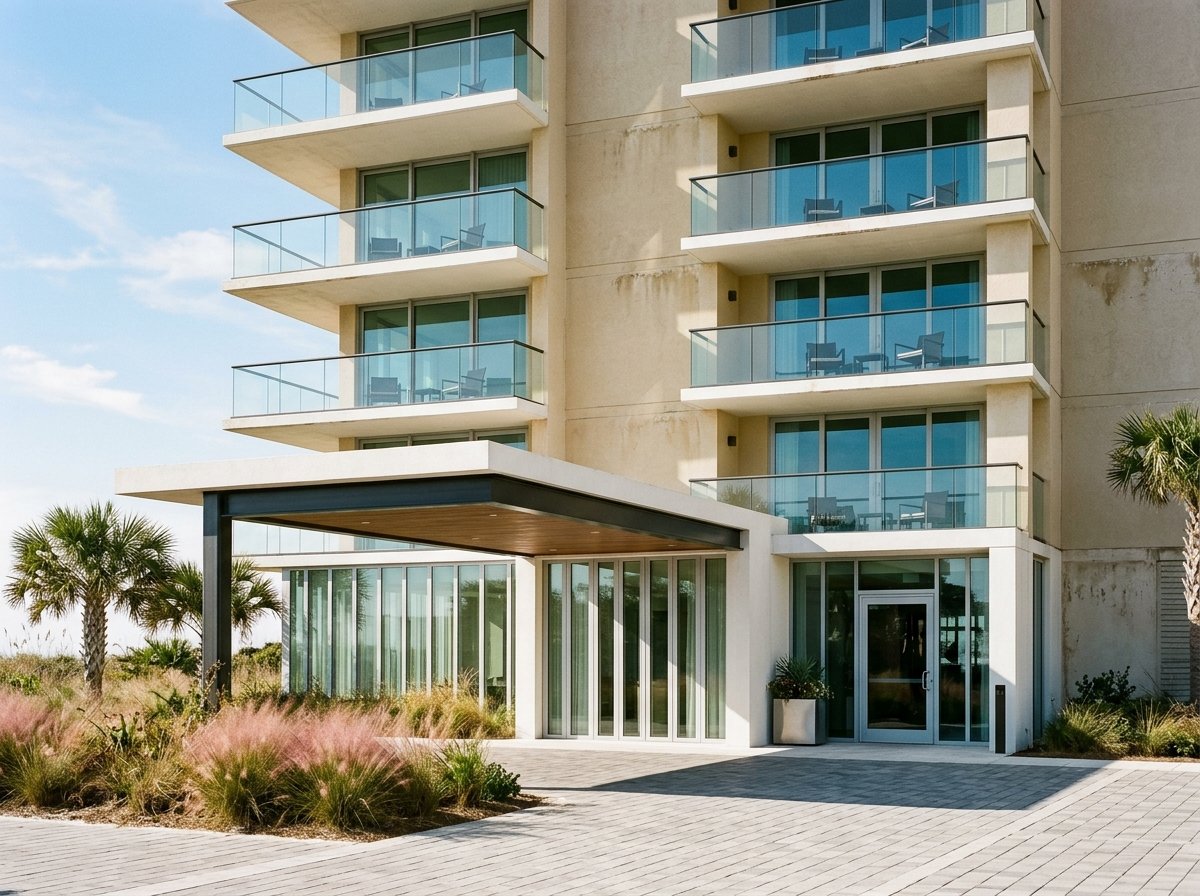
How North Myrtle Beach Oceanfront Condo Buildings Differ
July 2, 2026
July 2, 2026
If you have started shopping for an oceanfront condo in North Myrtle Beach, you have probably noticed something quickly: two buildings can both sit on the sand and still offer a very different ownership experience. Some feel more like full-service resorts, while others operate more like traditional condo communities with larger layouts or a quieter feel. If you want to buy with confidence, it helps to understand how these buildings differ before you fall in love with a view. Let’s dive in.
North Myrtle Beach includes four historic beach communities: Cherry Grove, Ocean Drive, Crescent Beach, and Windy Hill. Across those areas, the oceanfront condo market ranges from hotel-like resort towers to lower-density condominium buildings.
That matters because your day-to-day experience, monthly costs, rental flexibility, and guest profile can vary a lot from one building to another. The best fit usually comes down to how you plan to use the property, not which building has the flashiest brochure.
Some oceanfront properties are set up with a stronger hospitality model. These buildings often include front desks, larger common areas, food and beverage options, and extensive water amenities.
Bay Watch Resort is a clear example. Its public materials describe three oceanfront buildings, studios through 3-bedroom suites, and a large amenity package that includes multiple pools, hot tubs, indoor and outdoor lazy rivers, restaurants, a conference center, bars, and a gift shop.
Avista Resort also leans resort-style. It offers 1-, 2-, and 3-bedroom condo-style accommodations with oceanfront and ocean-view options, plus kitchens, balconies, pools, a lazy river, a restaurant, and a fitness center.
Prince Resort fits this category too, especially for buyers drawn to Cherry Grove and the pier area. It offers a wide range of unit sizes and view types across two towers, along with rooftop water amenities in Tower 2.
A key point with buildings like Bay Watch, Avista, and Prince is operations. Owner materials for Avista and Prince state that HOA shares are larger because the property maintains features such as the front desk, lobby, water amenities, restaurant, and lounge or common areas.
Other buildings still offer strong amenities but feel more like classic condominium ownership. These properties often attract buyers who want larger floor plans and a more residential setup, even if they still enjoy resort-style features.
Ocean Bay Club is a strong example. Public listings show 1- through 4-bedroom layouts, including larger units that can accommodate bigger groups, along with an oceanfront pool, lazy river, hot tub, indoor pool, fitness center, covered parking, and one parking pass per bedroom.
Crescent Shores is another standout in this category. Public rental-management pages describe 2- to 4-bedroom layouts, large oceanfront balconies, a long lazy river, indoor and outdoor pools, hot tubs, fitness center, and in-unit washer and dryer.
The Ashworth also fits buyers looking for larger oceanfront condos in Ocean Drive. Public rental pages describe 2-, 3-, and 4-bedroom oceanfront layouts with private balconies, indoor and outdoor pools, a lazy river, a hot tub, a kiddie pool, and parking options.
Some buyers want an oceanfront building that feels more private and selective. In North Myrtle Beach, South Shore Villas is one of the clearest examples of that lower-density model.
Its official site says the property has 63 luxury condos, and all are oceanfront with unobstructed views. Amenities include covered parking, glass elevators, large balconies, a lazy river, indoor heated pool, oceanfront pool, and fitness room.
For buyers who care about a quieter second-home feel, fewer units can be a meaningful difference. A lower-density building may offer a more private ownership experience than a larger resort tower with heavier guest turnover.
Amenities are not just a lifestyle perk. They are also part of the building’s operating model.
In resort-oriented properties, a broad amenity package often comes with more common-area maintenance and service layers. Front desks, restaurants, lounges, meeting space, and extensive water features can shape both the ownership experience and the monthly HOA structure.
That does not make one model better than another. It simply means you should weigh whether you want a more full-service environment or a more straightforward condo setup.
If you plan to rent your condo, building type matters even more. North Myrtle Beach requires short-term rentals in city limits to hold a business license, remit accommodations tax, and follow local rules on trash, parking, noise, and occupancy.
Beyond city rules, each building may have its own operating style and restrictions. Public resort pages show why this is important.
For example, Crescent Shores rental pages say the primary renter must be age 25 or older and stay on site. Those same pages list vehicle restrictions, including no motorcycles, boats, trailers, ATVs, or RVs.
The Ashworth public rental pages also state a minimum check-in age of 25, prohibit house parties, and do not allow pets. Prince Resort notes parking limits and says some unit types are not eligible for local rentals.
These details can affect who can rent your unit, how often it may appeal to certain guests, and how smoothly the rental process works. If rental income is part of your plan, you need to review both city requirements and building-specific rules before you buy.
The smartest way to compare North Myrtle Beach oceanfront condos is to start with your use case. A building that works well for one buyer may be the wrong fit for another.
If you want space for multi-generational stays or larger family trips, several buildings stand out for bigger layouts:
These properties advertise larger unit inventory, and many include 3- and 4-bedroom options that can handle bigger groups.
If your priority is a more private second-home experience, South Shore Villas is the clearest lower-density example in the research. The Ashworth also includes age and conduct rules on its public rental pages that suggest a more controlled guest environment.
If you prefer a property with more hotel-like operations, Bay Watch, Avista, and Prince are the main examples. These buildings operate with features such as front desk service, dining, housekeeping support, and broader guest-facing amenities.
That setup can appeal to owners who want a resort-managed environment. At the same time, owner materials for Avista and Prince show that these services are tied to larger common-area obligations.
Before you buy any oceanfront condo in North Myrtle Beach, the condo documents deserve close attention. In many cases, they tell you more about ownership than the listing photos ever will.
South Carolina’s Horizontal Property Act provides the core framework for condominiums. According to the South Carolina Department of Consumer Affairs, the recorded master deed or lease must describe the land and buildings, each apartment, the common elements, percentage interests, and any restrictions on leasing a unit.
The bylaws must also be recorded and must address administration, meetings, voting, collection of common expenses, and personnel. Owners are required to comply with recorded restrictions and bylaws, and amendments must be recorded to take effect.
When you compare buildings, ask for these items early in the process:
This step is especially important in oceanfront buildings where public rental pages already show differences in age requirements, vehicle restrictions, parking rules, and unit eligibility.
North Myrtle Beach is made up of Cherry Grove, Ocean Drive, Crescent Beach, and Windy Hill, and location can shape the feel of each building. Prince Resort has a strong Cherry Grove and pier-centered identity, while Ocean Bay Club is noted for convenient access to Main Street and the Ocean Drive activity corridor.
That kind of location detail can influence how you use the property yourself and what kind of guest experience the building tends to attract. For some buyers, being walkable to activity matters most. For others, a more tucked-away setting or lower-density building is the better match.
In North Myrtle Beach, oceanfront condo buildings differ in more than just price, size, and view. They differ in operating model, amenity package, HOA structure, rental positioning, and day-to-day rules.
The safest way to compare them is not to ask which building is best in general. It is to ask which building best matches how you want to live, visit, or rent.
If you want help comparing North Myrtle Beach oceanfront condos, reviewing condo documents, or narrowing down the right fit for your goals, Lindsay Jones offers the local insight and concierge-level guidance to help you move forward with clarity.
Stay up to date on the latest real estate trends.
Lindsay is dedicated to helping you find your dream home and assisting with any selling needs you may have. She values the trust clients place in her and works tirelessly on their behalf to offer attention to detail for each transaction. Contact her today so he can guide you through the buying and selling process.