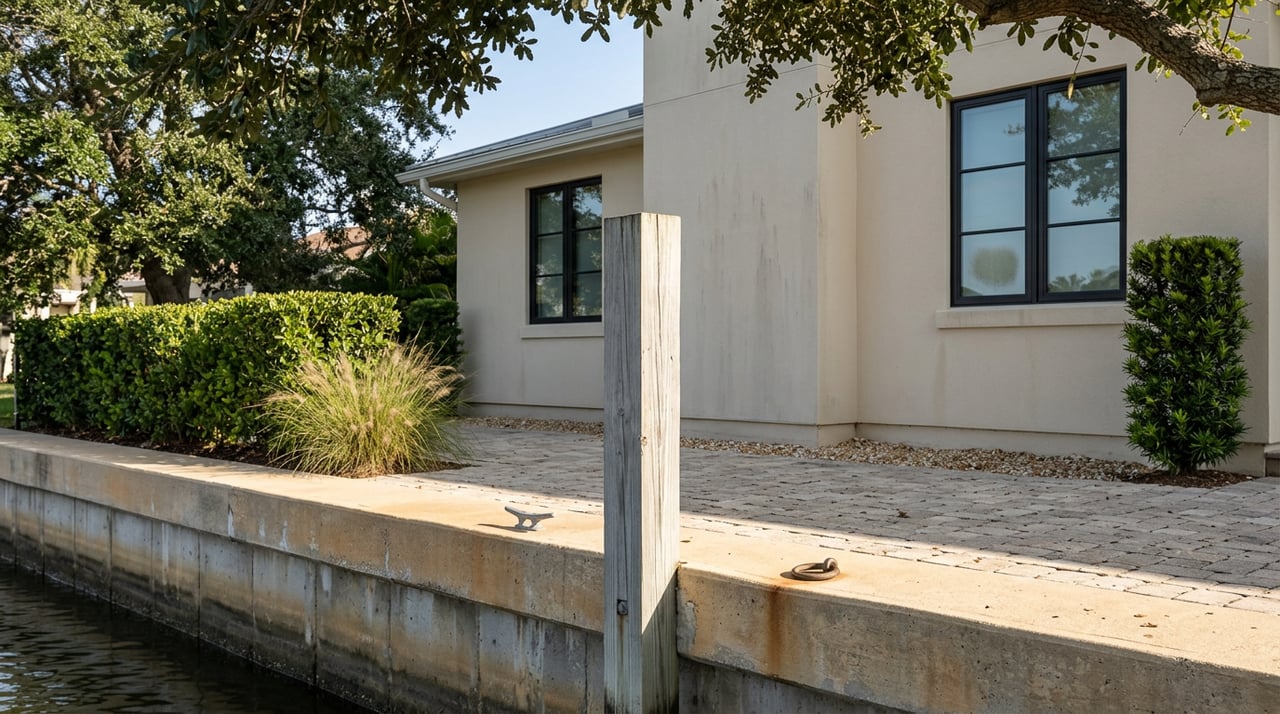
Selling a Waterfront Home in Murrells Inlet: Why the Permit File Sets the Price, Not the Comps
August 6, 2026
August 6, 2026
The first offer on a creek-front listing in the 29576 ZIP almost never falls apart over price. It falls apart in the second week of due diligence, when the buyer's attorney asks for the SCDES Bureau of Coastal Management permit history on the dock, the bulkhead, and any walkway crossing the marsh, and the seller cannot produce it. That is the transaction, in Murrells Inlet, in the summer of 2026.
The market is telling sellers something specific right now. As of April 2026, Murrells Inlet is carrying roughly 8.2 months of supply with a median 87 days on market and a 98.04% sale-to-list ratio, and more than 77% of active listings have taken a price reduction. A waterfront seller reading those numbers as a pricing problem is reading them wrong. In a market where the buyer has time, the deal is won or lost on documentation friction, not on the number itself.
Every waterfront property in Murrells Inlet sits inside a critical area regulated by the South Carolina Department of Environmental Services, Bureau of Coastal Management. The 2024 restructuring under Act 60 of 2023 folded the old OCRM function into SCDES BCM, and the Bureau now has direct jurisdiction over any alteration in coastal waters, tidelands, beaches, and the beach/dune system. That means the dock, the bulkhead, the pier head, the boatlift, the catwalk, and even a foot path across the marsh all live under a permit regime that a buyer's diligence team will trace.
When two comparable homes list at $850,000 on the same creek, the one with a clean, matched permit file for every visible structure is not the same house as the one without. In a buyer's market, that gap does not show up in the list price. It shows up in the concession the seller gives at day 21 to keep the contract alive.
The Bureau processes three categories of critical-area authorization. A seller does not need to become an expert in the regulations, but does need to know which category each structure on the property was built under, and whether the paperwork is on file.
| Authorization type | Fee | Typical trigger on a Murrells Inlet lot |
|---|---|---|
| Dock general permit (GP-04-001) | $100 | New private dock meeting standard size rules |
| Reconstruction general permits (GP-25-DR, GP-25-ECS) | $250 each | Rebuilding an existing dock or erosion control structure |
| Additions general permit (GP-03-001) | No fee | Catwalks to boatlifts, pierhead roofs, handrails, benches, storage boxes, mooring piles |
| Individual Critical Area Permit, Minor | Variable | Site-specific projects outside the general permit envelope |
| Individual Critical Area Permit, Major | Variable | 30-day public notice, larger alterations |
The reconstruction general permits are new. SCDES BCM introduced GP-25-DR for private recreational docks and GP-25-ECS for private erosion control structures to expedite what used to be full minor-permit reviews. That matters to a seller whose dock decking, pilings, or bulkhead face is at the end of its life. A pre-list conversation with the Bureau at 843-953-0200, or through the Project Manager Finder, will tell the seller whether the reconstruction fits inside GP-25-DR or has to go the longer route. A buyer who learns that answer for the first time after signing a contract has already started calculating a credit.
The single most consequential piece of paper on a Murrells Inlet waterfront transaction is usually not on the property itself. It is the approved Dock Master Plan filed with SCDES BCM for the subdivision. The Bureau keeps every approved DMP on file and, in its own guidance, encourages prospective buyers to call before writing an offer.
The DMP is a lot-by-lot statement of dock eligibility. In older subdivisions along the inlet, some lots that appear to have creek access are not on the eligible list. In newer developments, eligibility can be conditioned on shared-use arrangements the Bureau has explicitly encouraged to reduce dock density on narrower creeks. Neither the deed nor the plat will always tell that story.
A waterfront listing without a DMP determination in the file is a listing that invites the buyer to discover a limitation on their own timeline. Discovery on the buyer's timeline is renegotiation on the buyer's terms.
Two practical seller moves make this a non-issue. Request a written DMP status from BCM before the property hits the MLS, and, if the dock is shared with a neighbor, get the maintenance and use agreement in writing and into the disclosure packet. The Bureau's own guidance is blunt about shared docks: outline responsibility and use up front. A neighbor conversation is a five-minute call before listing and a six-week problem after contract.
South Carolina's Residential Property Condition Disclosure Act, codified at S.C. Code Ann. § 27-50-10 through § 27-50-110, requires the seller of most one-to-four-unit residential properties to deliver a completed disclosure to the buyer before the contract forms. The South Carolina Association of Realtors publishes SCR Form 310, which meets the statutory requirement. The Act shifted South Carolina away from a pure buyer-beware posture, so a marsh-front seller answering questions on autopilot creates real liability.
Three fields catch waterfront sellers more than any others. The structural components question sweeps in bulkheads and retaining walls that show any tide-line staining or displacement. The water and drainage question reaches into yard flooding on king tides, which is a normal seasonal event on many creek lots and still has to be disclosed if the owner knows about it. The environmental hazards question sits next to the lead-paint disclosure required for any home built before 1978, which matters on many of the older cottages closer to the historic district and the MarshWalk. The Act only requires disclosure of what the owner actually knows, but a seller who has lived through a decade of tide cycles and answers "no representation" on every water question invites the buyer's attorney to keep asking.
Local inspection culture on the Grand Strand backs this up. Firms including Top To Bottom Home Inspection, LAB Home Inspections, Tidelands Complete Home Inspections, and Walton Inspection Services routinely offer pre-listing inspections, wind mitigation, mold assessment, and radon testing on Murrells Inlet properties. A pre-listing inspection is not required and is not legal advice. It is a way to convert unknowns, which the seller can honestly answer as unknown, into knowns the seller can price into the listing rather than into a repair credit.
For a waterfront home in Murrells Inlet, the goal of the pre-list phase is to hand the buyer's attorney a folder that closes the diligence questions before they are asked. In a 5.5-to-8.2-month supply market, that folder is worth more than an extra week of professional photography.
Every item on that list is a question the buyer's team will ask. Answering them in the listing packet is the difference between the 98% sale-to-list ratio the market is currently paying and the concession that lands in the amendment two weeks later.
Does a new roof on an existing pier head need a permit? Yes, but the additions general permit GP-03-001 covers pierhead roofs, handrails, catwalks to existing boatlifts, benches, storage boxes, and mooring piles at no fee. The paperwork still has to be filed and kept.
The dock was here when I bought the house and I never touched it. Am I still exposed? The permit file follows the structure, not the current owner. A buyer's attorney will ask for the original authorization. If the file is thin, the seller's move is to call SCDES BCM before listing and confirm what the Bureau has on record, rather than let the buyer's team make that call first.
Is my seasonal high-tide flooding a required disclosure? S.C. Code § 27-50 requires disclosure of what the owner actually knows. A recurring king-tide event a longtime owner has observed is knowledge. The Act does not require the seller to hire an inspector to go looking for problems, but it does require honest answers to the questions on SCR Form 310. Consult a South Carolina real estate attorney on the specific facts of the property.
Can I close before the reconstruction permit comes through? Often, yes, if the structure is functional and the disclosure is clean. What buyers push back on is uncertainty, not process. A GP-25-DR application on file with a Bureau acknowledgement is a very different conversation than "we've been meaning to look into it."
Selling a creek- or marsh-front home on the Grand Strand rewards the seller who treats the permit file as part of the pricing package. If you are thinking about listing a waterfront property in Murrells Inlet this fall or next spring, Lindsay Jones will walk the dock, review the SCDES BCM file, and build the pre-list packet that gives your listing the leverage the current market is quietly handing to prepared sellers. Work With Lindsay.
Stay up to date on the latest real estate trends.

Lindsay is dedicated to helping you find your dream home and assisting with any selling needs you may have. She values the trust clients place in her and works tirelessly on their behalf to offer attention to detail for each transaction. Contact her today so he can guide you through the buying and selling process.