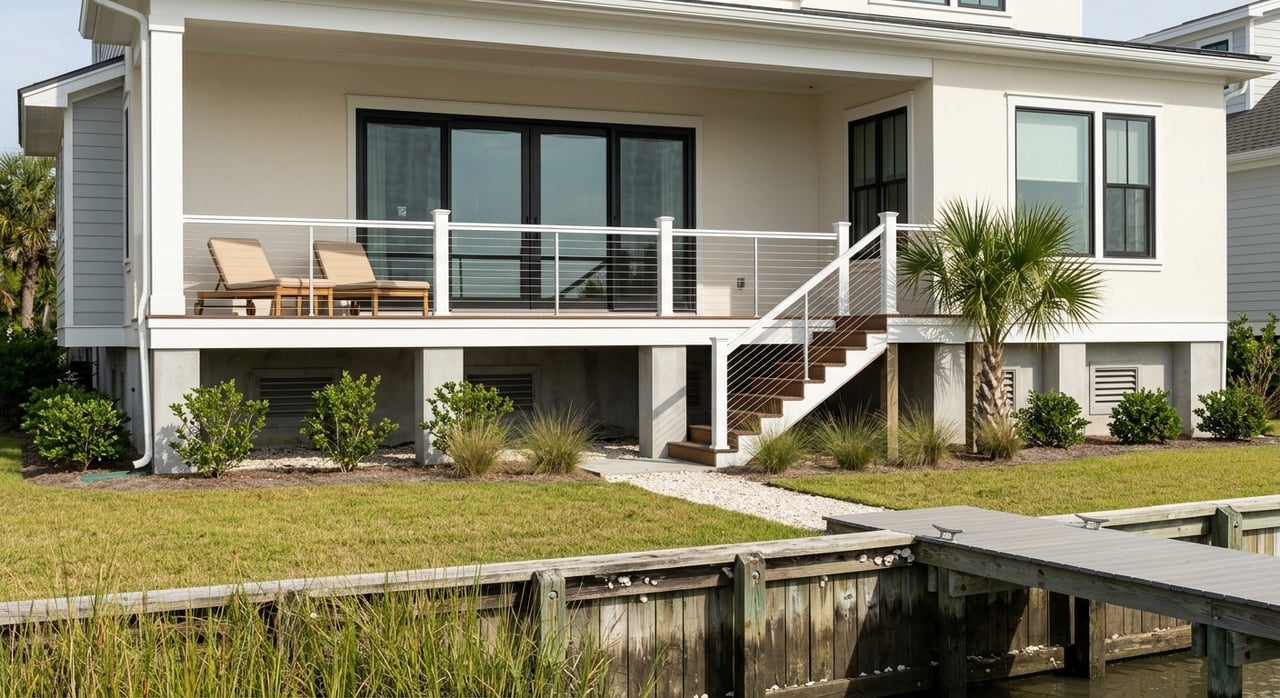
Buying Creekfront In Murrells Inlet: Risks, Rewards And Due Diligence
May 14, 2026
May 14, 2026
If you have ever dreamed about stepping into your backyard and seeing the creek at sunrise, you are not alone. Creekfront homes in Murrells Inlet can offer beautiful views, boating access, and a true coastal lifestyle, but they also come with details you need to understand before you buy. If you are considering a waterfront property in ZIP code 29576, this guide will help you weigh the rewards, spot the risks, and know what due diligence matters most before closing. Let’s dive in.
Creekfront living in Murrells Inlet offers more than scenery. For many buyers, the appeal is daily access to the water, room for a dock or boat access, and the kind of marsh and creek views that make a property feel unique.
That lifestyle value is a big reason waterfront homes often command stronger pricing than inland homes. In Murrells Inlet, the broader market remains active, with CCAR reporting a single-family median sales price of $399,450 for March 2026 and $455,000 year-to-date through March 2026 in ZIP code 29576.
At the same time, waterfront inventory is still a smaller slice of the market. Realtor.com shows 209 waterfront homes listed in Murrells Inlet, which means your options may be limited and the details of each property matter even more.
Not every creekfront home is priced the same, even if two properties share the same ZIP code. In this part of the coast, value usually comes down to the full package rather than the address alone.
Key value drivers often include:
A home with a usable, permitted dock setup and favorable elevation may offer a very different ownership experience than one with a similar view but more restrictions. That is why creekfront buying requires a closer look than a standard home search.
One of the biggest mistakes buyers make is treating flood risk as a neighborhood issue instead of a property-specific one. FEMA identifies flood hazard by exact location, and the Special Flood Hazard Area is the area expected to flood in the base flood, which is a 1 percent annual-chance event.
That means two nearby properties can carry different flood considerations. Before you get too far into a purchase, verify the flood zone by exact address and ask whether an elevation certificate already exists.
Flood insurance is also a separate issue from a standard homeowners policy. FEMA states that most homeowners policies do not cover flood damage, so you should not assume your base policy fills that gap.
With creekfront property, the monthly cost of ownership is not just about your mortgage and taxes. Insurance can be a major part of the picture, especially along the South Carolina coast.
The South Carolina Department of Insurance says coastal property owners may need multiple layers of coverage. Depending on the home and location, that can include homeowners coverage with wind protection, a separate wind-and-hail policy through SCWHUA in designated coastal territory, and flood insurance.
Timing matters too. FEMA says there is typically a 30-day waiting period before an NFIP flood policy takes effect in most cases, which is important if you are trying to line up coverage around closing.
Flood policy limits matter as well. FEMA’s current NFIP manual shows maximum coverage of $250,000 for building coverage and $100,000 for contents coverage on a single-family home, so buyers of higher-value creekfront homes should understand those limits early.
In ZIP code 29576, one important detail is that market reporting rolls up properties across both Georgetown and Horry counties. That means you should confirm the exact county jurisdiction for any parcel before assuming the same permit rules apply.
For properties in unincorporated Horry County, local floodplain rules can directly affect renovation plans and future costs. Horry County states that permits are required when construction or improvements exceed $500, and buildings in AE and VE zones must be elevated 24 inches above base flood level.
The county also requires compliance to be verified by a finished-construction elevation certificate. If you are buying an older creekfront home with plans to improve it, this is not a small detail.
Another key threshold is the 50 percent rule. Horry County says that if repair or improvement costs reach 50 percent of a structure’s market value, the building must meet new-construction flood standards.
For many buyers, the first question is simple: can I have a dock here? The answer is often more complicated than expected.
South Carolina’s Bureau of Coastal Management has jurisdiction over critical areas such as Coastal Waters and Tidelands. In those areas, permits are required for common waterfront alterations, including docks, floating docks, bulkheads, boatlifts, pier heads, and foot paths.
If a seller says a property is a “dock lot” or “dockable,” do not rely on that language alone. Ask for the dock permit number, any dock master plan, and any HOA or developer documentation before closing.
A dock master plan may identify possible dock lots, but it does not guarantee a permit. That distinction can materially affect both value and your future enjoyment of the property.
Dock design is also shaped by creek width. SCDES sizes docks based on open water measured from marsh grass to marsh grass, and those measurements can restrict what is allowed.
General sizing guidance includes:
SCDES also states that boatlifts, davits, and boat storage docks are not allowed on creeks under 20 feet wide. So if your vision includes keeping a boat at the property, creek width is one of the first items to verify.
Even if a property already has a dock, your work is not done. Buyers should confirm that the structure was properly permitted, that the permit is active if needed, and whether it can be transferred.
SCDES says active permits may be transferred, but major additions or enlargements usually require a new permit or amendment. The agency also states that work must be completed within five years unless an extension is approved.
A state permit also does not replace other approvals. You still need to check local government requirements, HOA or ARB rules, and any other applicable approvals tied to the property.
Creekfront ownership is rewarding, but shorelines are dynamic. Over time, erosion, water flow, storm impacts, and structural wear can turn a beautiful lot into a higher-maintenance property than buyers expected.
Clemson Extension notes that salt marsh living offers strong recreation and wildlife value, but residents may also face shoreline erosion and water-management concerns. In practical terms, that means you should budget for recurring care instead of treating shoreline upkeep as a one-time cost.
If a property needs shoreline stabilization, that process has its own review path. SCDES says living shoreline installations require an individual critical-area permit and professional drawings, and the state encourages living shorelines as an alternative to hardened erosion-control structures.
The most defensible creekfront purchase is usually the one where the major unknowns are addressed before closing. A small difference in elevation, permit status, or insurance cost can have a large effect on both lifestyle and long-term carrying cost.
Before you make an offer, verify these items:
If land disturbance is expected to reach 0.5 acre or more, permit review becomes even more important. That is one more reason to look beyond the view and understand the full ownership picture.
Buying creekfront in Murrells Inlet is rarely a simple yes-or-no decision. It is about matching the property to your goals, your risk tolerance, and the kind of ownership experience you want over time.
The right property can deliver exceptional lifestyle value, especially if you want a second home, a waterfront retreat, or a primary residence with direct access to the coastal setting that makes the Grand Strand so appealing. The key is making sure the home works on paper as well as it does in person.
That is where detailed local guidance can make all the difference. When you understand flood exposure, insurance structure, dock rights, jurisdiction, and shoreline upkeep before closing, you are in a much stronger position to buy with confidence.
If you are exploring creekfront homes in Murrells Inlet or anywhere along the Grand Strand, Lindsay Jones offers concierge-level guidance, local market insight, and a detail-first approach to help you evaluate waterfront opportunities with clarity.
Stay up to date on the latest real estate trends.
Lindsay is dedicated to helping you find your dream home and assisting with any selling needs you may have. She values the trust clients place in her and works tirelessly on their behalf to offer attention to detail for each transaction. Contact her today so he can guide you through the buying and selling process.